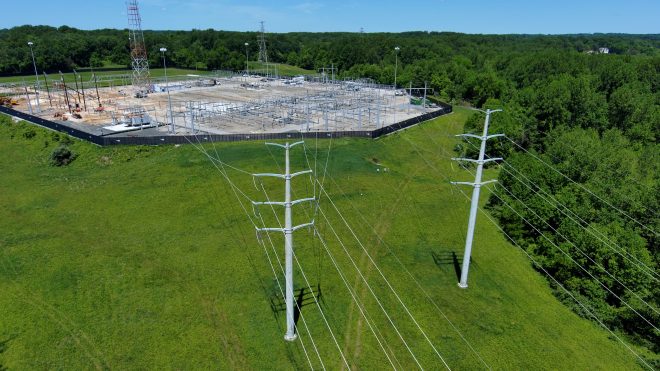

Over 100 years ago, starting in 1908, transmission towers were built to power communities. Over time, they began to show their age. With splice failures and broken conductors, they threatened reliability and needed a more modern system upgrade.
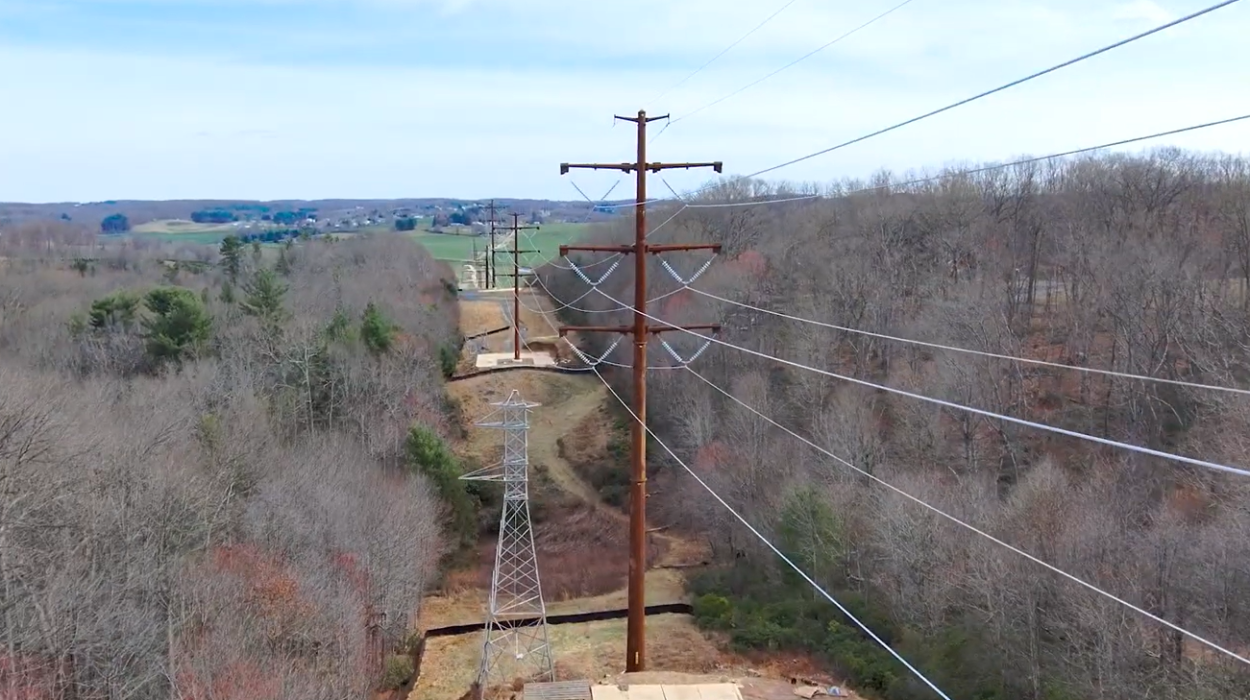
115kV double-circuit steel monopoles are now replacing the parallel towers that once took over that land space. This wasn’t just a simple swap of pole towers; it was a full-scale transformation. Ground crews constructed new monopoles, transferred wires, energized the lines, broke down and removed the old towers, all with minimal disruption to the surrounding community.
The benefits of this transformation are impressive: The new towers are much smaller, shrinking from 60 feet in diameter to just 8 feet in diameter, which freed up space and reduced environmental impact. There will be little to no continued maintenance over time since the monopoles are made from a material that rusts intentionally over time to create a protective seal and requires no painting.
Beyond looking better and requiring less maintenance, this transmission upgrade also delivers real value to customers in the surrounding communities. The new transmission poles feature larger conductors which carry double the capacity and improve efficiency. This means that the grid can carry a higher load with better reliability, which is a critical step towards bettering the system for the future.